
Meditation
Transcript
Hello everyone, lovely to see you.
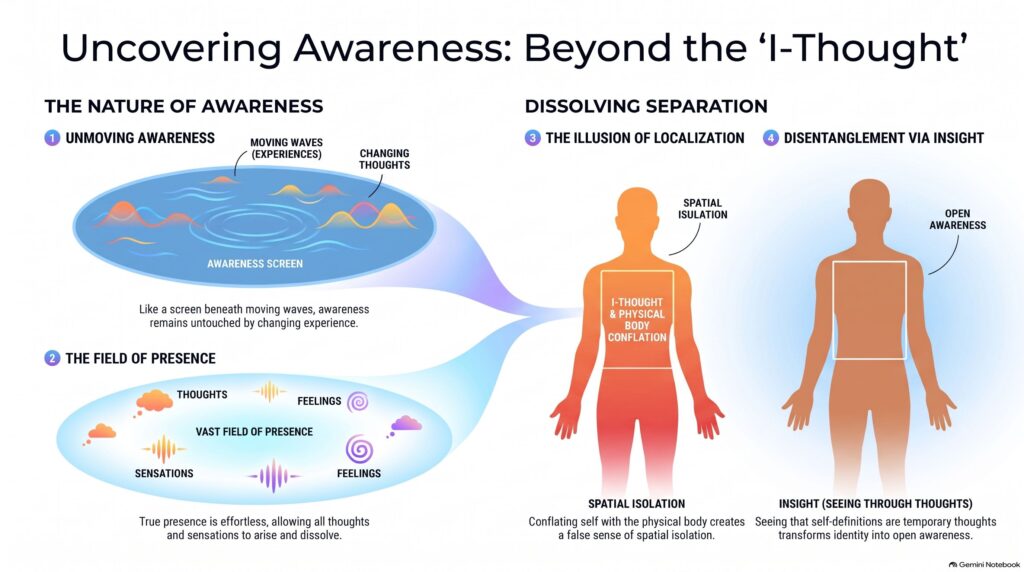
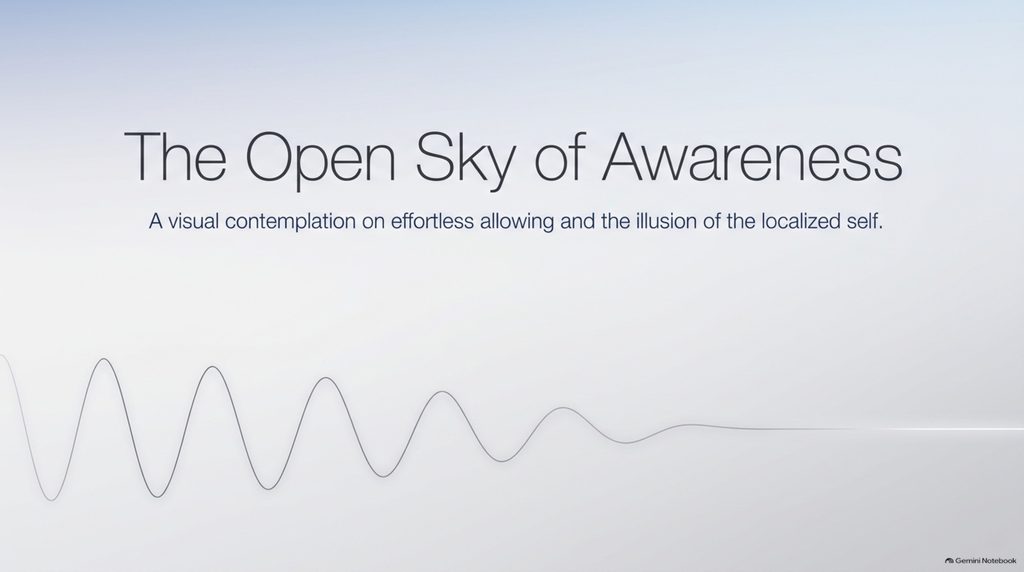
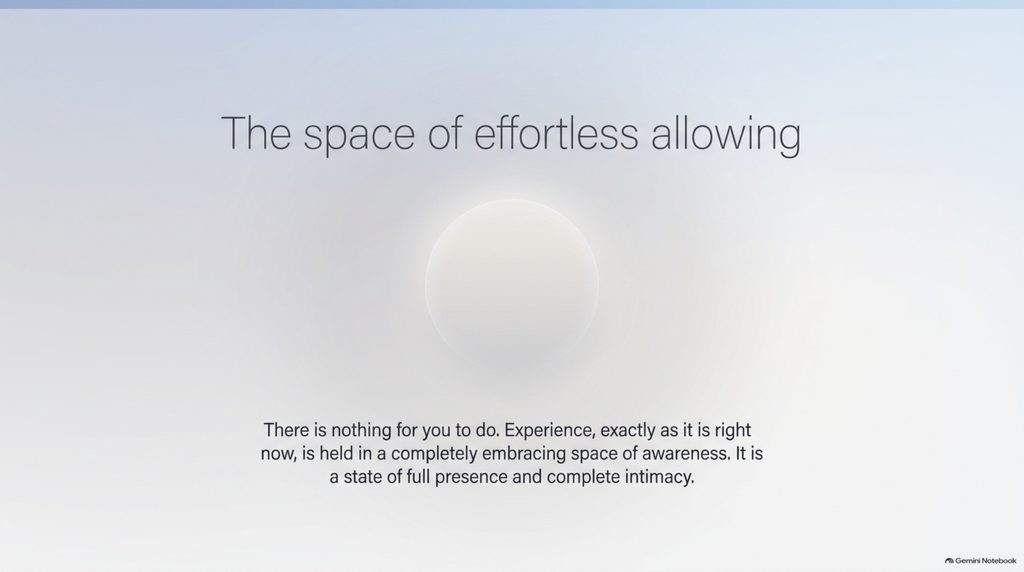
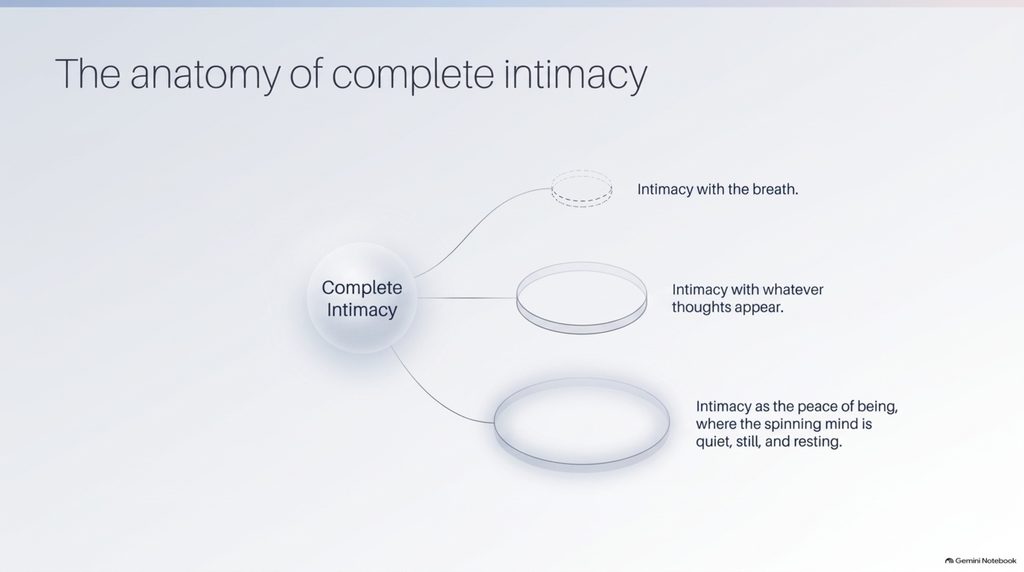
Welcome your experience as it is, for the duration of this meeting, be this effortlessly allowing, embracing space of awareness. This full presence that is a complete intimacy.
Intimacy with the breath, intimacy with whatever thoughts appear, intimacy as the peace, the peace of being where the mind is quiet and still, resting.
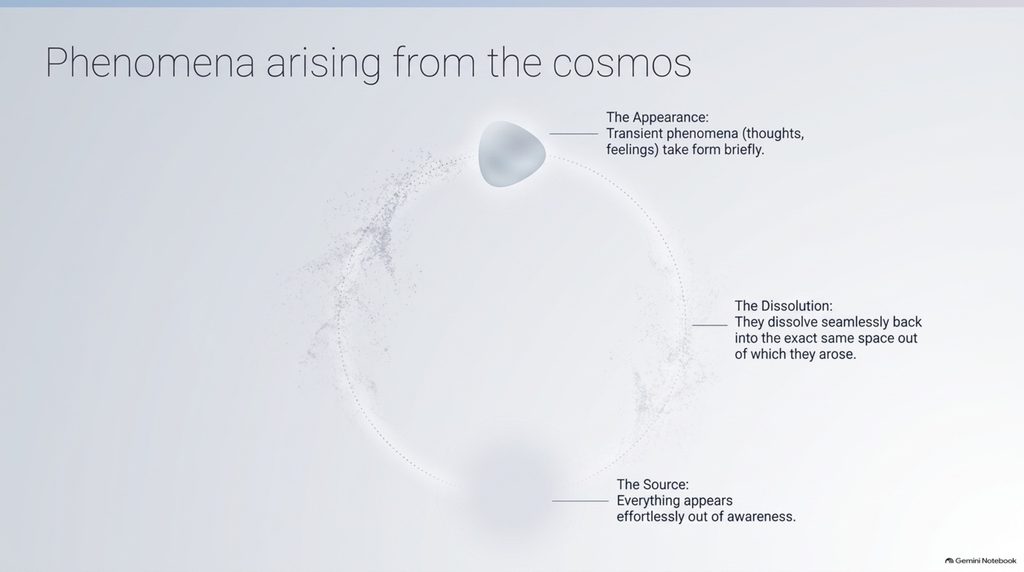
Is there nothing for you to do? Everything appears to you effortlessly out of the cosmos, out of awareness, and dissolves back from the same space out of which it arises.
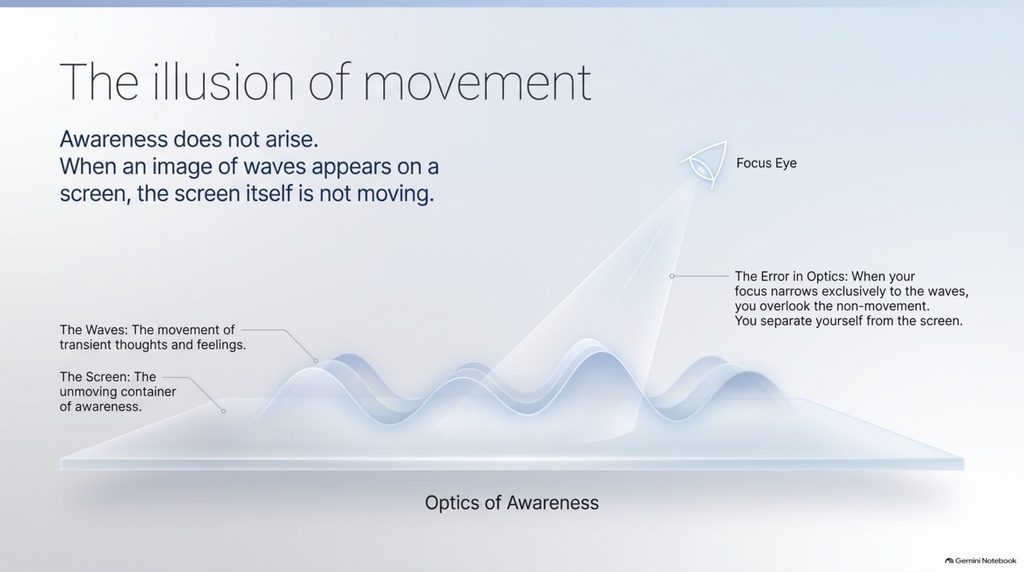
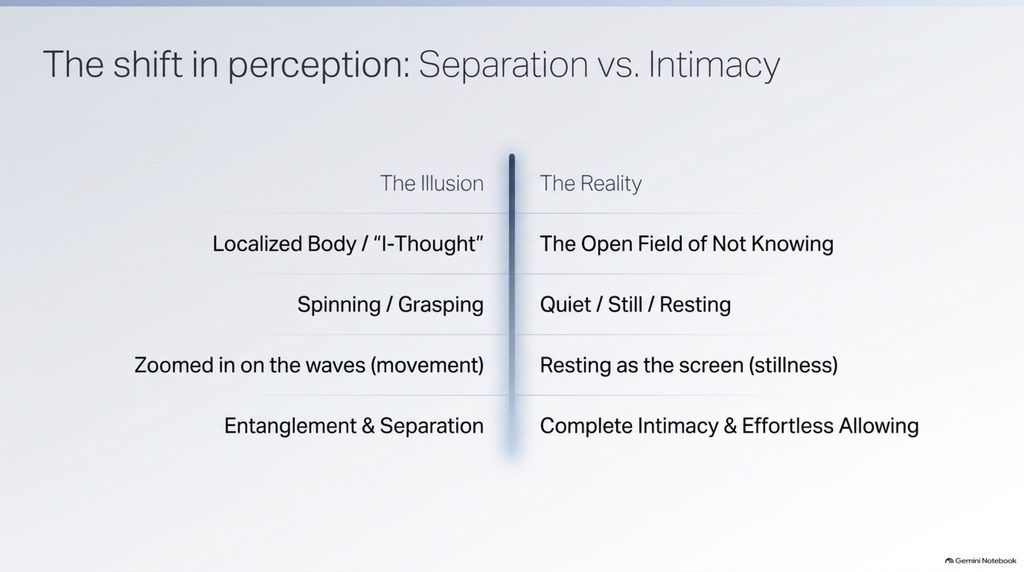
Awareness does not arise. When there is an image of waves on the screen, the screen is not moving. Only when your focus is on the waves and you overlook the non-movement do you overlook the screen because you separate yourself from the screen.
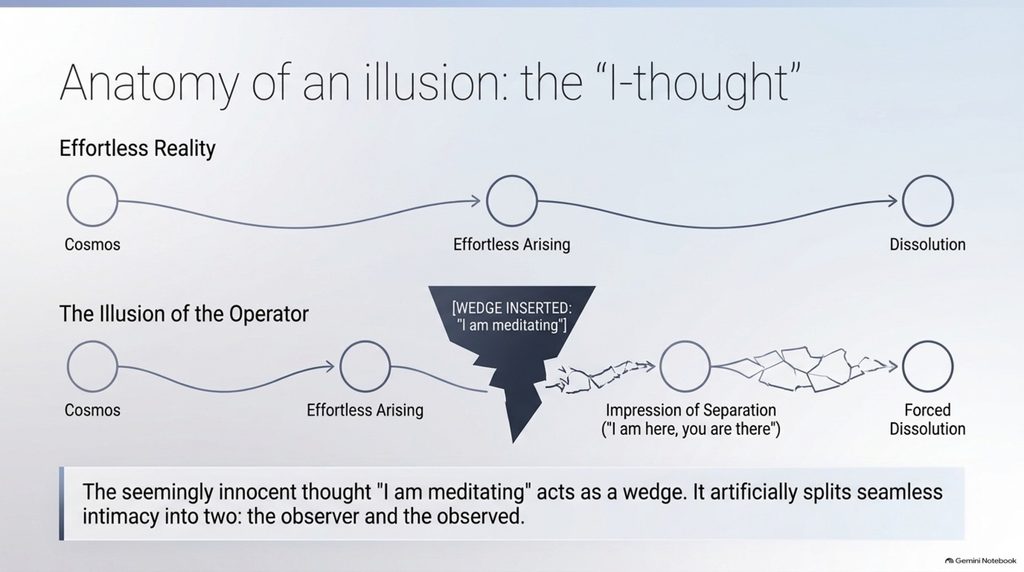
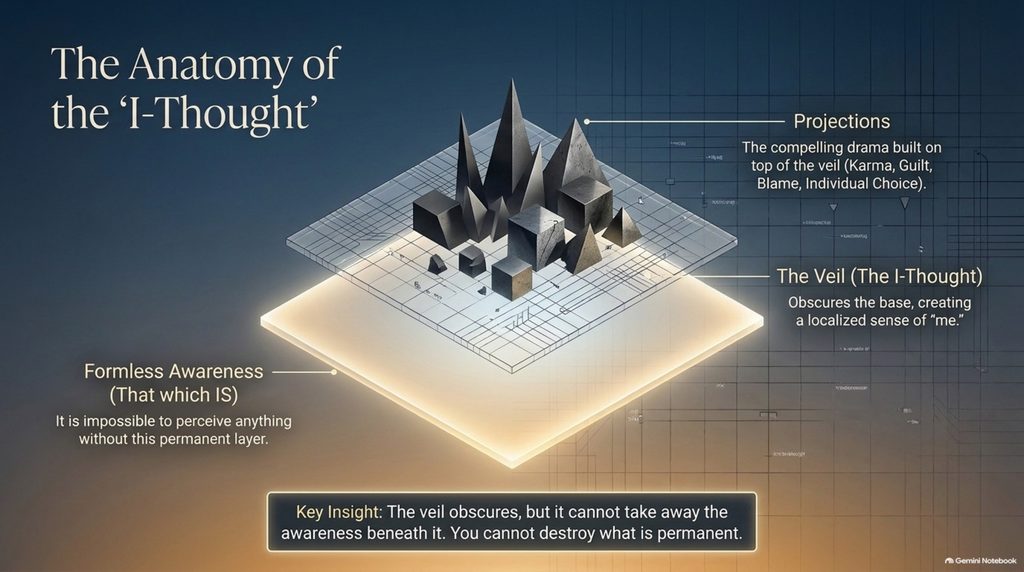
And the I-thought appears: I am meditating. This I-thought creates the impression of separation. I am here, you are there.
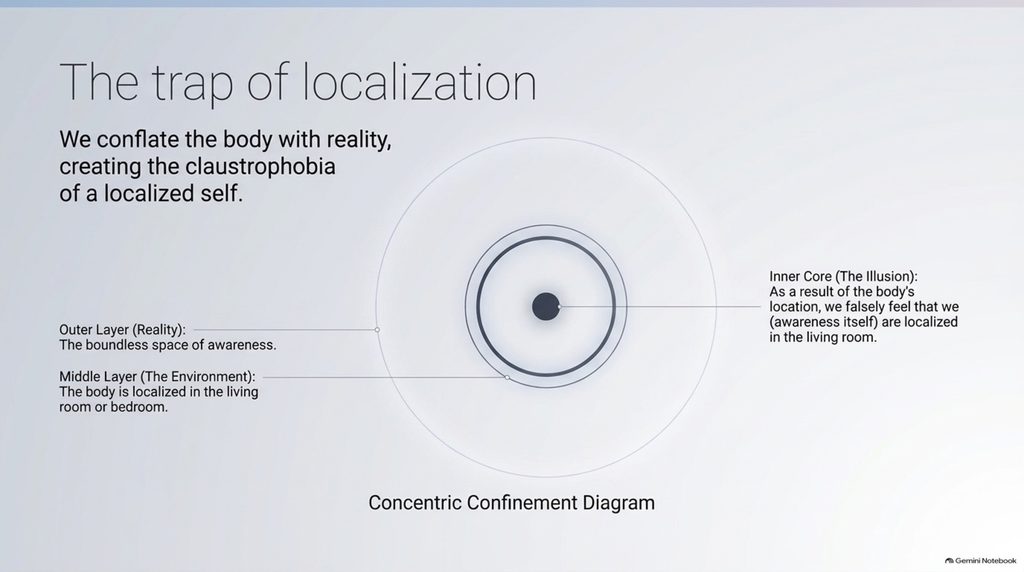
We conflate the body with reality and then we experience ourself to be localized. The body may be localized in the living room or in the bedroom, and as a result we feel that we are localized in the living room or bedroom.
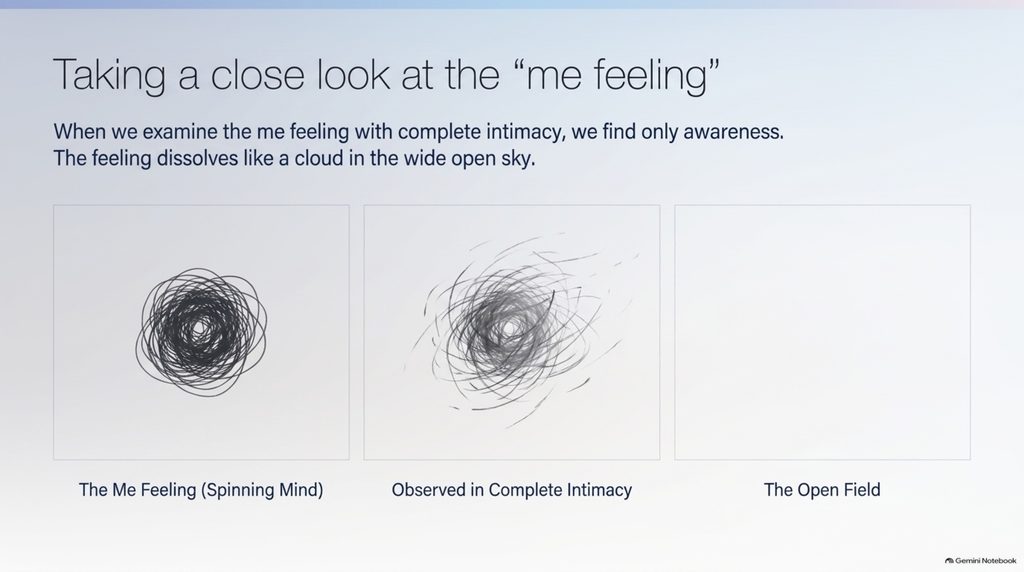
And we take a close look at the me feeling in complete intimacy. We only find awareness, presence, intimacy.
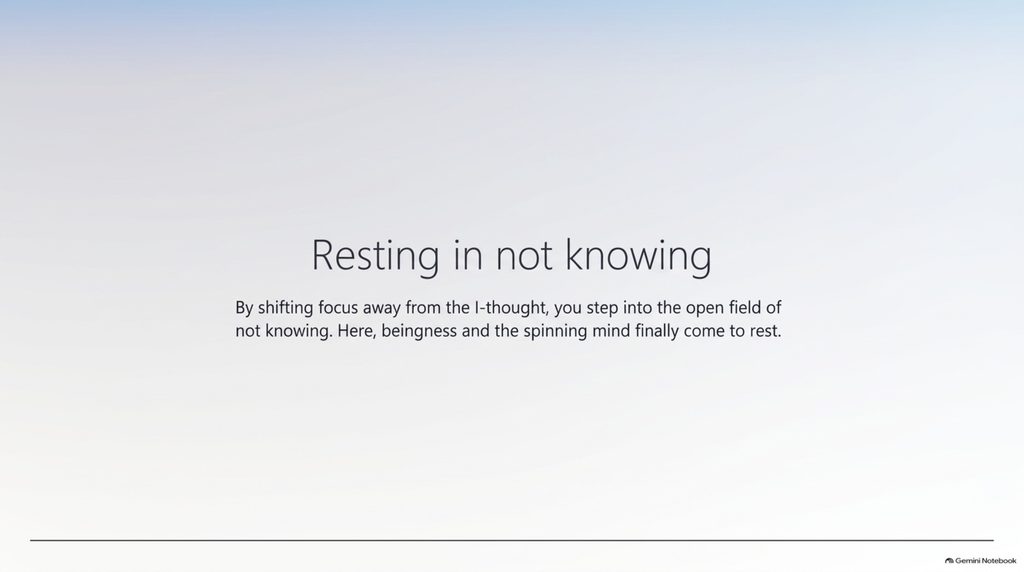
My feelings seem to be like a dissolving cloud in the wide open sky. You may shift from this focus on the I-thought and me feeling to go over into the open field of not knowing.
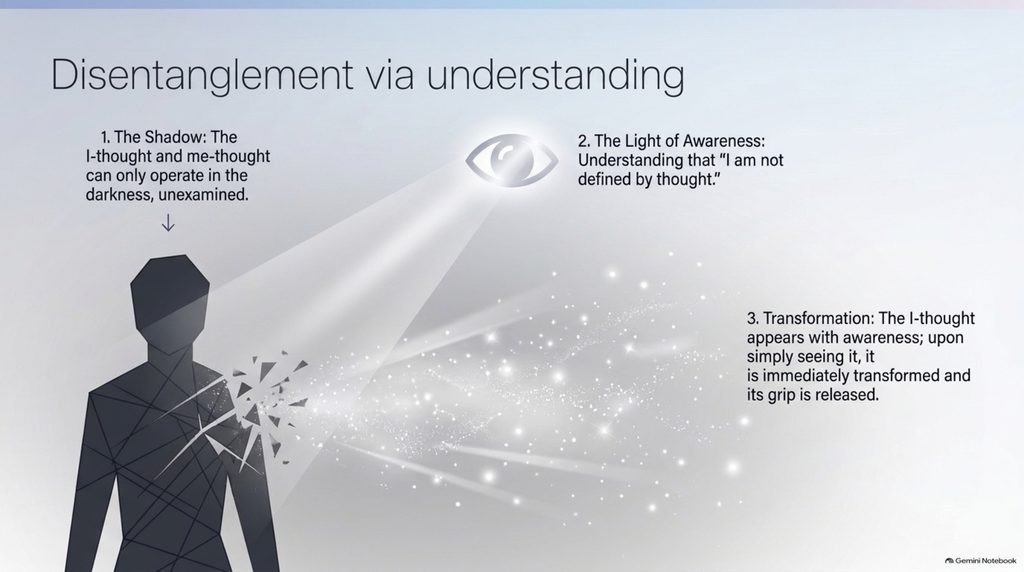
Beingness and the spinning mind can come to rest. The disentanglement from the I-thought and me feeling comes via understanding. Understanding that I am not defined by thought, that the I-thought, the me-thought, does not define me.
It appears with awareness, and upon seeing it, it’s transformed. It can only operate in the darkness, in the shadow.
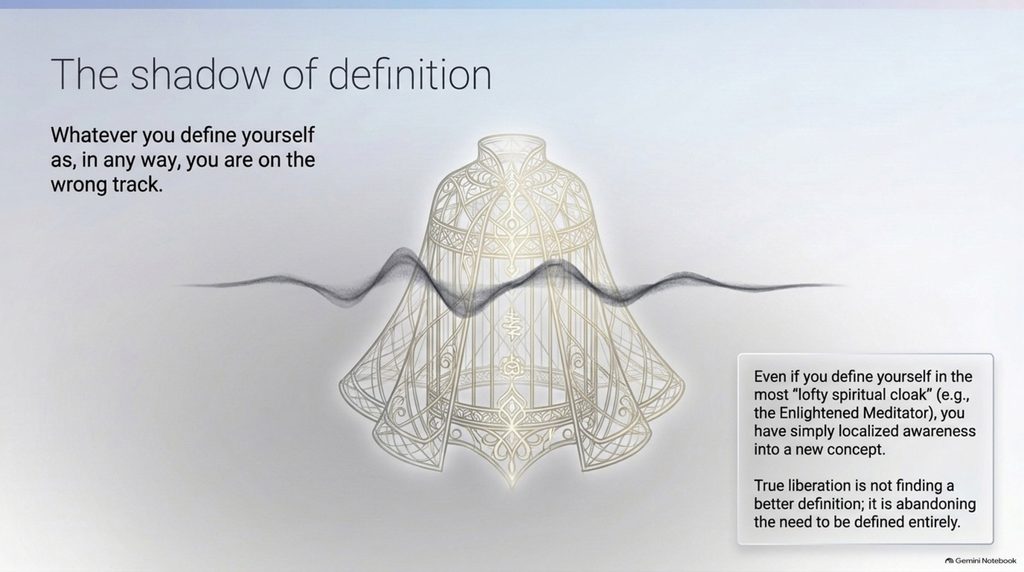
Whatever you define yourself as, in any way, you are on the wrong track. Even when you define yourself in the most lofty spiritual cloak.
Satsang
Transcript
So if you could open your eyes and listen, welcome to turn on your videos. We can take whatever questions you have, whether you want to share or explore.
Hi, Magdi.
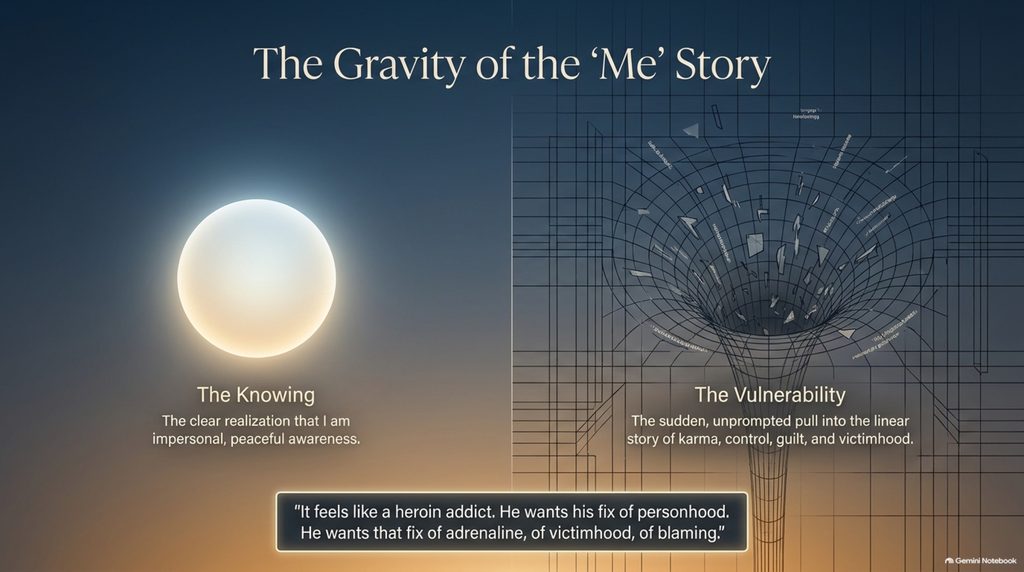
While most of the time I’m relatively clear on what we’re pointing to—the impersonal, peaceful awareness, which is my true nature—in those moments of vulnerability, which can come out of nowhere unprompted, I find myself almost falling for the stories about karma and how there’s an individual who’s in control of his decisions and his circumstances are the result of his decisions.
This kind of linear cause and effect. When I’m in this place of clarity, I can see that just appears as a story in the mind. But there are times where that story seems so compelling that it’s quite difficult for me not to get lost in it.
That being said, I have noticed over the past few years there’s a lot less appeal in those stories as well. I don’t get pulled into them as much as I used to.
I just wondered if you had any thoughts or insights about how to relate to guilt or sin or insecurity in some form.
Yeah. There is still an appeal to the story, the me story—guilt or blame. There is still an appeal. You are still interested on occasion to wear that outfit, because you already have the understanding that I am not that which appears. I am not the thoughts that appear. I am not the memories that appear. I am this form of awareness that already has landed.
Given that understanding is there, whenever you get on board the ship that says I am a person with karma, with personal choice, you’re choosing that. There is a certain appeal to still run this movie, to enjoy it. Enjoy the movie of “I am guilty. I am a victim. Why is this happening to me?”
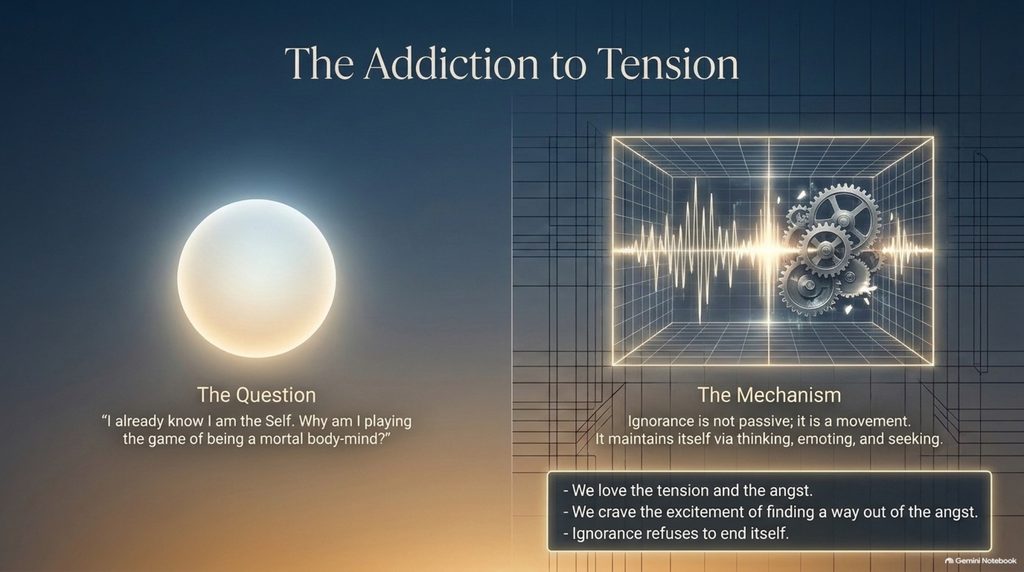
I already know I am the self. Why am I playing the game of being this mortal body-mind? There is an appeal in these thoughts because there is a certain tension in those thoughts. I am this open space of awareness, and why am I being an individual? There is a certain tension in the question, in this contemplation. And there’s still a certain draw towards this tension.
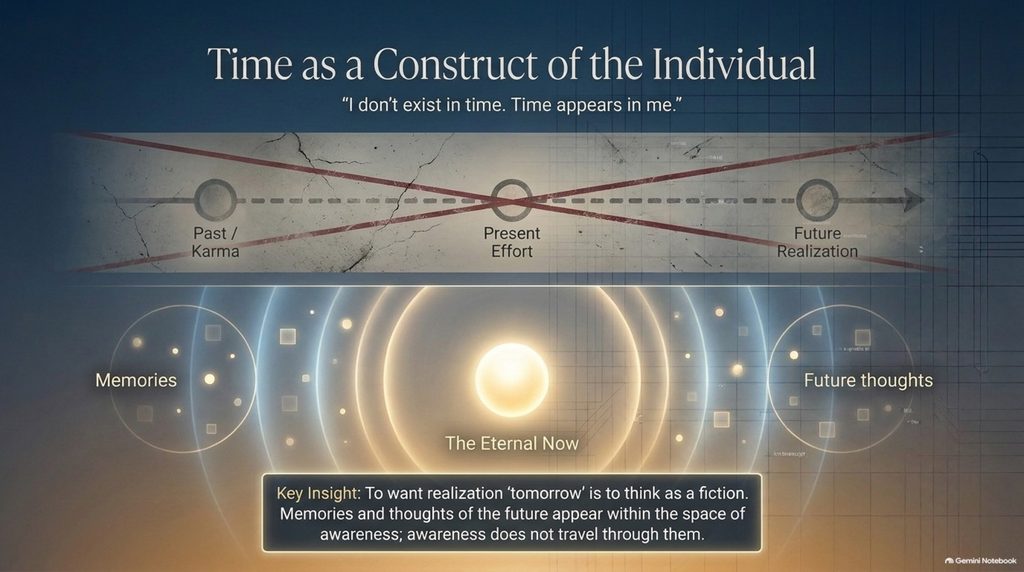
The understanding is yours. It’s already available to you. But I don’t exist in time. Time appears in me as memories and thoughts, but I don’t appear in time or space. Space appears in me. The mountain appears in me.
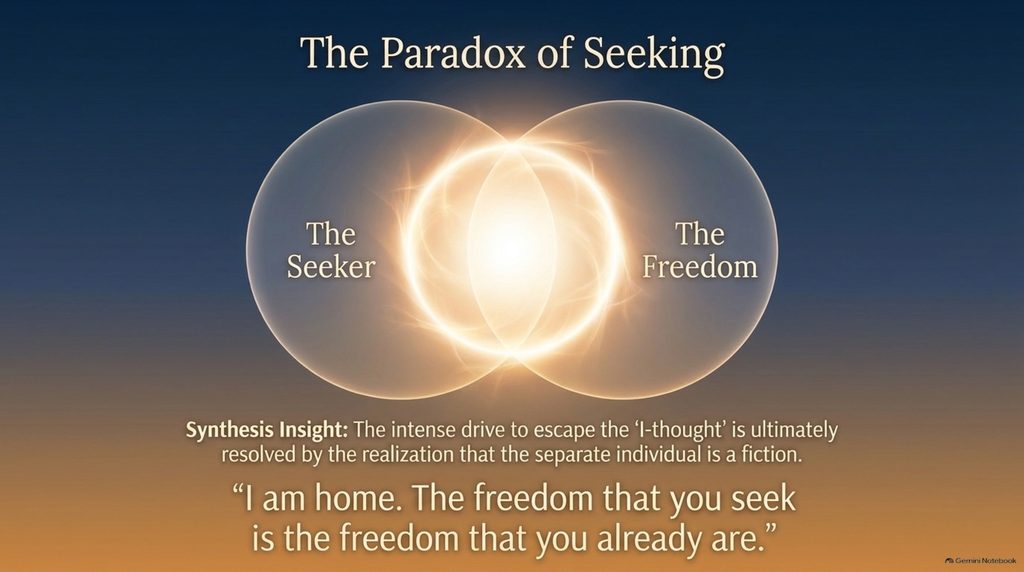
We want to be established in time. I want to be realized today, tomorrow, after tomorrow. I want to be realized as a separate individual. But realization is the understanding that the separate individual is fiction.
So whenever we’re thinking of ourselves in time, the past and the future, how we did and how we’re doing, we’re thinking of ourselves as an individual. How am I doing? What is this I that you refer to? A figment of your mind and your emotions. It’s not what you are.
The mind cannot comprehend the truth. It is transformed by the understanding, but it is not the mind that understands. The mind is grappling, wants to understand, but it’s just the game we are playing.
As I reflect on it, it feels like there are maybe two forces at play. One feels like I haven’t developed the stamina yet to hold the mind stories at bay and say, “No, I’m not interested. I know that’s not me.” It’s almost like a baby learning to walk.
What is this you’re referring to? I have not developed the stamina. That’s a good question. Interest in truth, interest in exploration, interest in the self is not an act of personal will. I think that’s the second factor—there’s a part of me that feels like it’s a heroin addict. He wants his fix of personhood. He wants that fix of adrenaline, of victimhood, of blaming, of judgment.
Who is that he? You’re talking about the personal self? What is it that’s once it’s fixed? What is it you’re referring to?
I guess maybe it’s the other way around. Maybe it’s the mind wants a hit of the self. It wants awareness to—I don’t know, the mind can’t want, I guess.
No. Ignorance doesn’t want its ending. Ignorance is a movement. It maintains itself via movement, via thinking, emoting. “Why is this happening to me? How come I’m not there? What is it that I need to do to become a better self?” It’s a movement.
I guess the entanglement with the story of the separate self still runs deep. So I guess I’m still picking apart the formless awareness from the story. It feels like there’s still fragments of it spread out. But again, maybe that’s another story.
Yeah. What is it to be with that story? And so who does that compulsion to believe the stories belong to?
Let’s say someone says, “This is your karma”—whether it’s good karma, bad karma, doesn’t matter. This is your karma. What is it in me that wants to believe it, that wants to grasp onto that and almost find some security in it? To say yes, it’s my fault or it’s because of me. Who is there outside of you, besides you? Who is there?
No one. It’s just another story talking.
Maybe I need to just stop asking the questions and rest in the peace of peacefulness.
No, it’s good. It’s good to be looking at these questions. It’s part of the inquiry, part of the investigation into your own mind, your own experience.
I can see the fool and the one that is being fooled right here, right now. It’s all of you. The fool is you, and the one who is doing the fooling is you. Take a look at this.
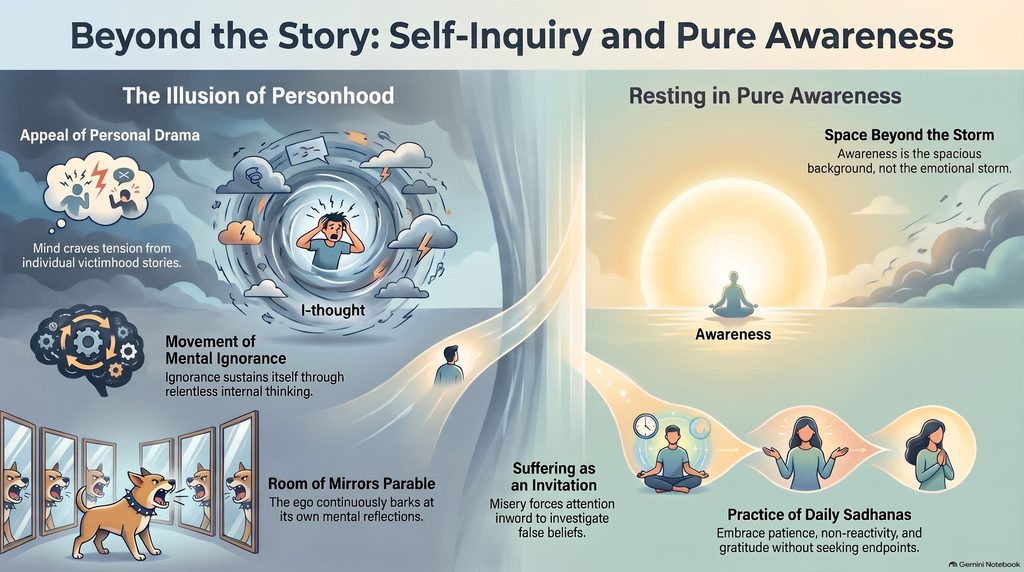
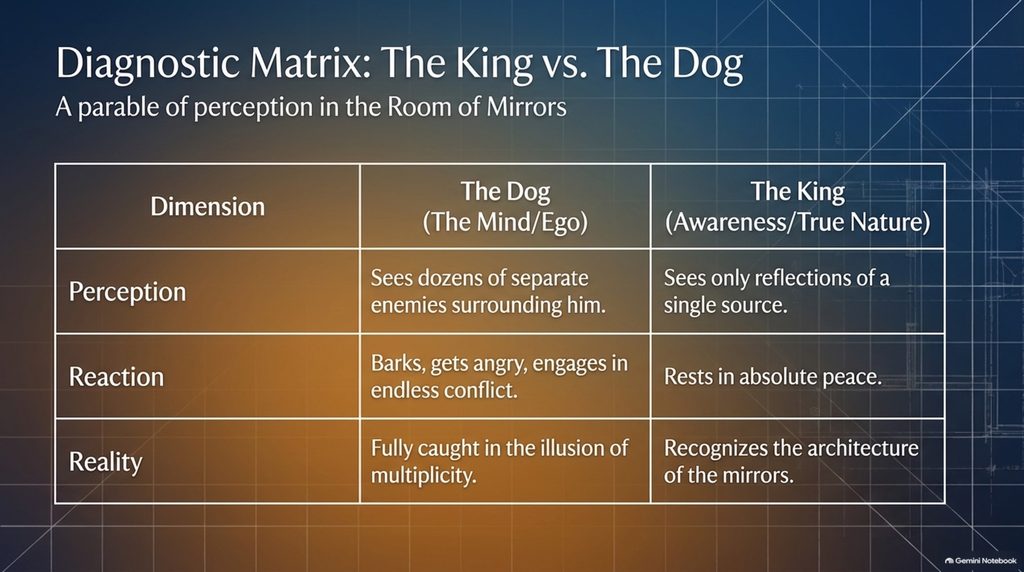
It reminds me of a story I’m sure you’ve heard—I think it’s in the Hindu tradition. A king builds a room full of mirrors and he loves to go in and look at himself from all these different angles. One day his dog gets inside there, but the dog doesn’t know it’s a room of mirrors. So he just sees himself surrounded by dozens of dogs. And then they start barking at him and he starts barking at them, and the dog gets mad. Yeah, it’s all the dog. The king recognizes it, but the dog doesn’t.
Yes, that’s a good one.
Maybe I just need to stand as the king a bit more often and leave the dog out of the room.
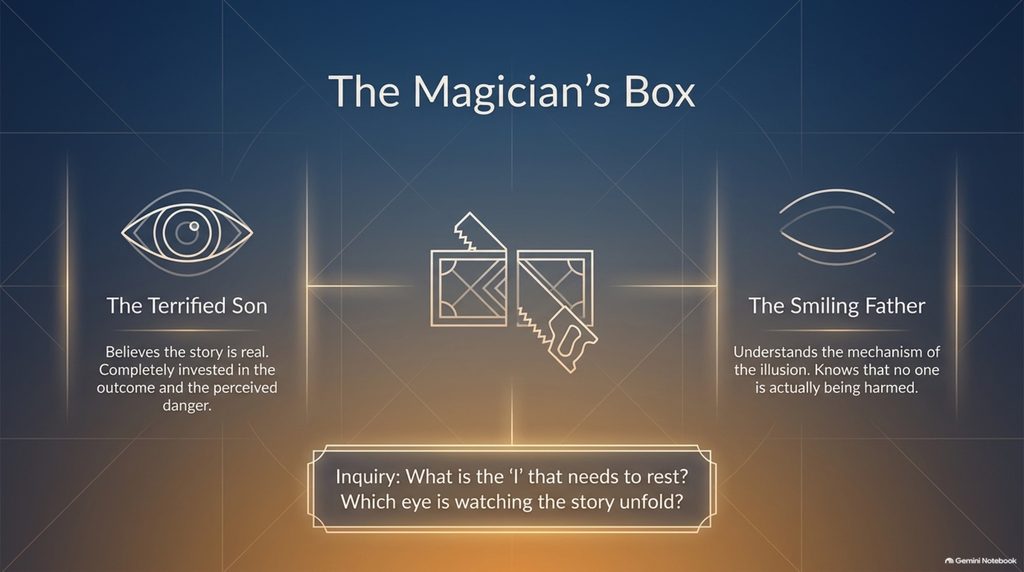
Yeah. It reminds me of a similar parable where a father goes with his son to the fair, the circus. There is a magician who is cutting a lady. He puts the lady in a box. She lies in a box and he’s cutting her with a saw in two. And the kid is terrified and the father is smiling.
Yeah.
Yeah. I mean, I know what I need to do. I need to rest. But it’s an interesting question: What is the eye that needs to rest?
Yeah.
I guess I need to just see the stories go just as they come. They leave no trace behind.
What is this eye that needs to see the stories as they unfold? In the sense that whatever I am, I’m still here before the story comes. I’m still here after the story goes. It’s only—I don’t know. There’s some investment of identification or belief in a story. There feels like there’s something that fuels a story and keeps it hanging around for a bit longer.
Yeah. We love the stories. We love the tension, we love the excitement, we love the angst and finding the way out of the angst. All of that is part of the play. And there is some sadistic enjoyment in suffering because it’s optional. You’re not condemned to suffer because you are the self. We choose to suffer. We choose to overlook being and refer to I as somebody, some entity.
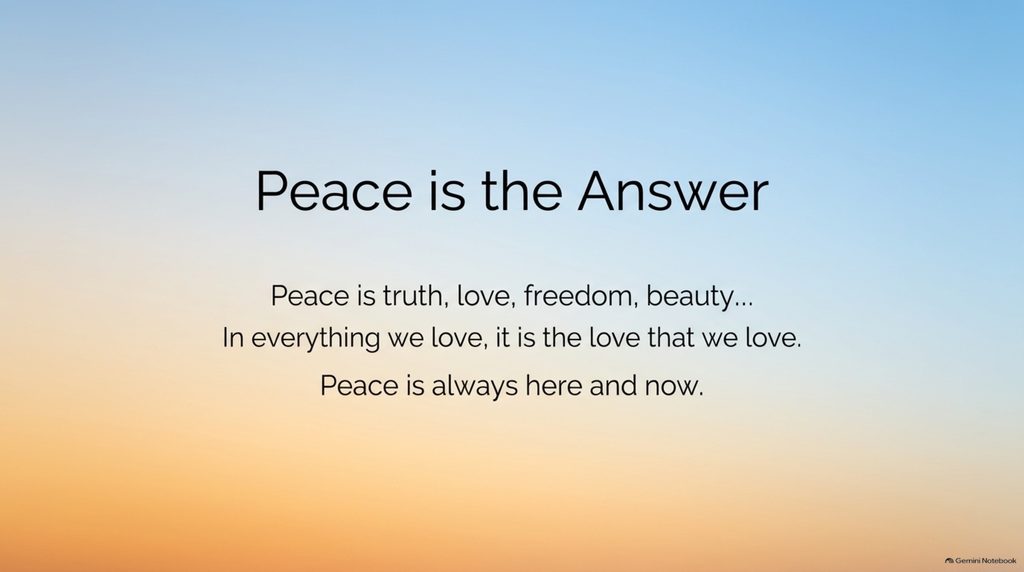
Peace is the answer. And that peace is always here and now.
Yes. Peace. I just need to accept the answer. Who doesn’t love peace? Peace is truth, love, freedom, beauty. Who doesn’t love beauty and peace and freedom? Truth, wisdom. In everything we love, it is the love that we love. It’s not the thing. We love to love.
Nice to see you, Kinell.
And you.
Any questions?
It’s just so beautiful, your exchange. It’s always here. This is so fascinating and so simple.
Sorry I talked too much, but I just wanted to say thank you.
Yeah. And here is nowhere and everywhere.
Absolutely, yes.
Yes, yes.
And your cough seems to be gone. So Lin making some pressure last time worked.
Just thank you. Today is Thanksgiving, and every day is Thanksgiving. But I feel very fortunate and grateful. And what a gift just to let it go, let it be, and to be free of lack.
I agree, except for the blah, blah, blah, blah, blah.
Don’t take it away. Holger’s signature is blah, blah, blah, blah.
Yeah, yeah, yeah. We got you. We got your story, Holger.
Blah, blah, blah.
We got your number.
Yes, blah, blah.
I love you, Holger.
I love you too.
I also want to say thank you to both of you, Magdi and Kunel, for this exchange, because I tried to come into peace with the meditation. That’s why I opened up. You know, I’m making a space here in the morning to be centered before Thanksgiving celebration with the family. And the meditation didn’t do it for me. My mind was like, ugh, all over the place. The emotions of last night and the expectancy.
But the dialogue—the dialogue—I am at peace now. So it’s like this: I am, thank you so much, because this is the gift of being together.
Hello, Magdi.
Hello, Vaksha.
We just need to know that this I-thought is actually a thought.
Why? It doesn’t feel like a thought. It feels like the real self, especially in moments of anger or when you’re in sorrow. You tend not to see it as a thought. You tend to forget the presence, the peace, the awareness. Why does it happen?
Could you explain how to be aware that the I is a thought? The feeling of I, me, is also a thought, like so many other thoughts which we know are thoughts, which we understand. But the I-thought becomes, at times—especially when you have to—it takes away the awareness, the presence from you.
Well, not fully. Not completely, because it’s not possible to perceive anything, any thought, without awareness. It’s not. So we speak about the veil, you know, the I-thought as a veil over awareness. But it doesn’t really take it away. It’s not possible to take away that which is.
This is sort of the journey, you know, the human journey: to be completely entrapped, sort of fixated by the I-thought and the emotions—anger, jealousy, feeling unloved, feeling unappreciated.
And it appears very real. The unhappiness and the suffering that comes with it is also very real. It appears very real, the anger and the depression. And that is how our attention is drawn to take a closer look.
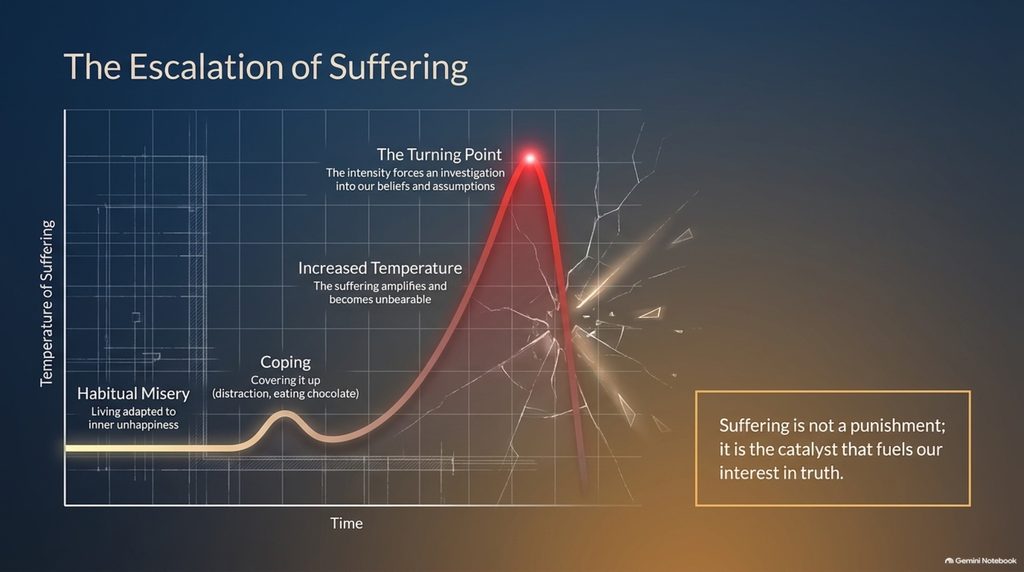
If you live habituated to being upset, being in some inner misery, and you’re habituated to it, you adapt to it. You continue to live with the misery, you continue to live with the unhappiness. You cope with it. You eat a lot of chocolate. You know, whatever you cope. You compensate. You try to cover it up, which we do. We all do that. And when we do that, the temperature of the suffering increases. God increases the temperature of suffering. It makes it even more intense so that at some point we turn our attention towards the suffering to explore, to investigate.
What are our beliefs? What are our assumptions? From where are we living? From what assumptions, from what belief structures are we living? How are we making our decisions? What’s behind the scene?
Our interest in truth is fueled by the intensity of the I-thought. The I-thought feels so real and we feel like we are in a trap. We feel like we are inside a limited mortal cage. And it’s unbearable. At some point, it’s unbearable.
And the message is to take a look: Are you really in a cage? What is the cage? It’s these awful emotions. But how do they trap you?
Anger.
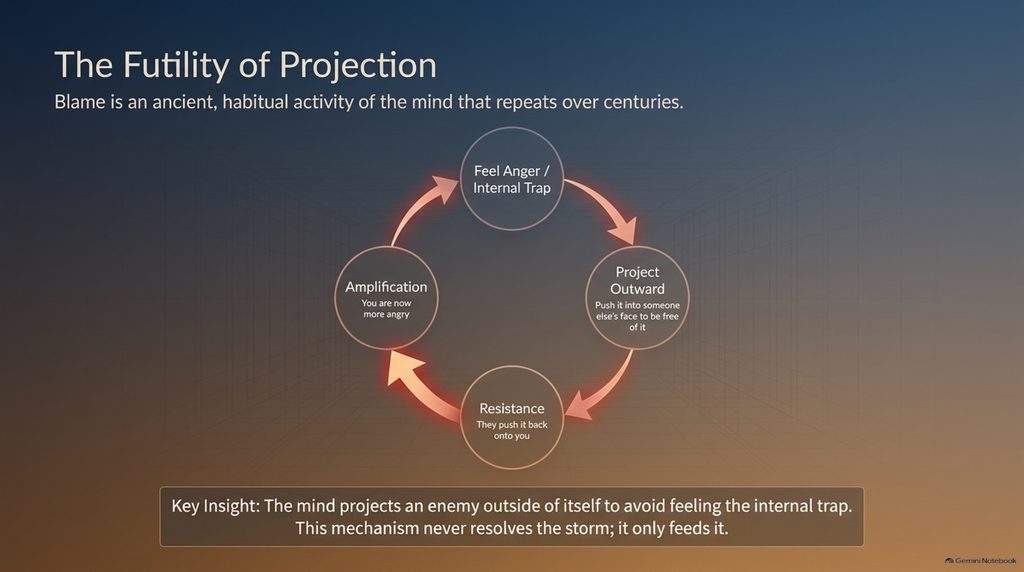
And yet you fight against anger. You don’t want it. So you want to throw it in somebody else’s face so you’re free from the anger. You push it out. Boom. And they push it back on you. Now you are more angry.
How do we deal with anger? The mind is projecting somebody outside of me. We are blaming. We are blaming. This is all the activities of mind—habitual, old, ancient activities of the mind that repeat themselves over and over for centuries and centuries.
But to come to a little glimpse of understanding that this whole event, this whole emotional field, this I-thought, is something much larger than that, much bigger than that, that perceives that—that perceives the emotion.
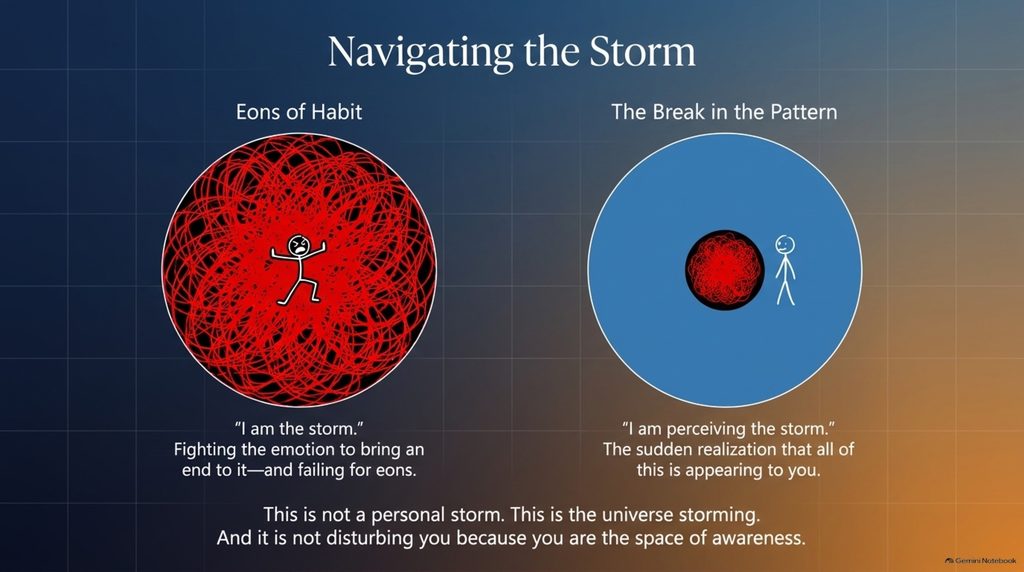
This little break in the pattern. There’s a little break in the pattern sometimes where you see, “Wait a minute. All of this is appearing to me. I am not angry. There is anger. There is a storm. But I am not the storm. I am perceiving the storm.”
This is very big because for eons we are the storm. We are fighting the storm to bring an end to the storm and never succeeding at bringing an end to the storm because another storm, and another storm, and another storm. We never succeed to bring an end to the storm.
And suddenly there is a little break where we see, “Oh wait a minute. I’m not in the storm. I don’t need to bring an end to or stop the storm. I’m the awareness. This is not a personal storm. This is the universe storming. And it’s not disturbing me because I am the space of awareness.”
Whereas for eons I’ve been disturbed by the storm. It’s affecting me. It’s making me depressed, angry. I’m angry at God. I’m angry at my family.
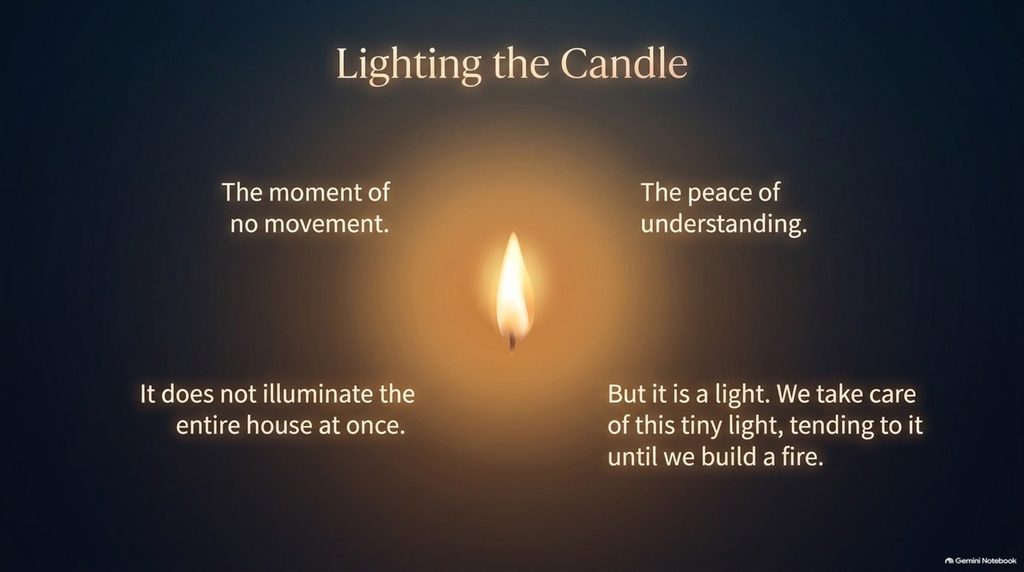
So there is a moment where this activity stops. And there is a moment of no movement through peace—not the peace because the storm has ended, no. Peace of God. The peace of the understanding.
And that is extremely valuable because it’s like lighting a small candle in the darkness. It does not illuminate the entire house, but it illuminates. It is a light, this tiny light.
And so we take care of this light and then slowly, maybe we build a fire. Then there is more light in the room, in the house.
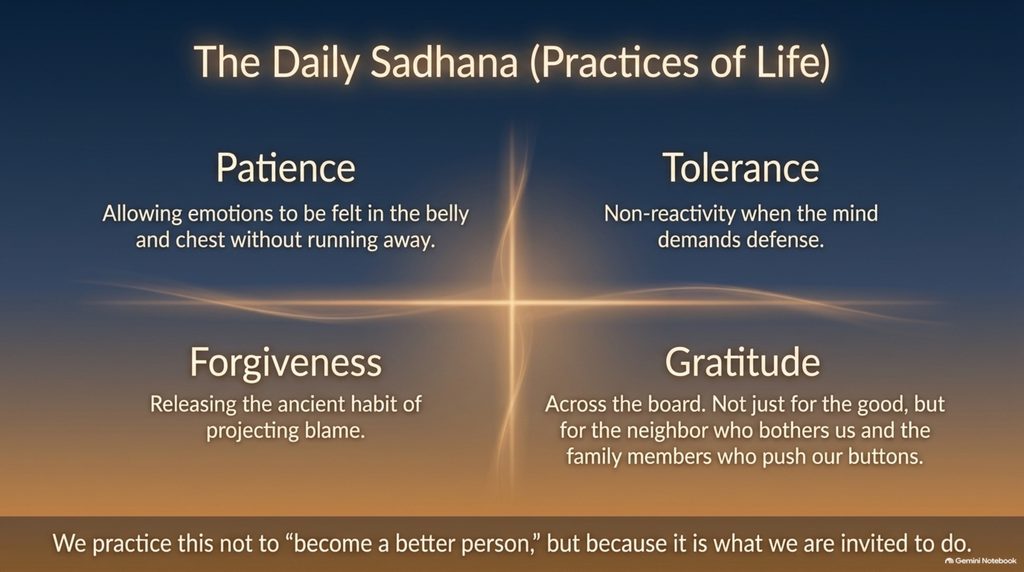
We explore tolerance, patience, non-reactivity. It can be very challenging, very challenging, because the emotions are right there in our chest, in our face, in our heart, in our belly.
How to be, to allow that, to feel that, instead of trying to get rid of it by blaming, accusing, justifying, running away?
There are certain simple sadhanas of life—living life sadhanas of patience, of tolerance, of forgiveness, of gratitude. Being grateful. Not just for the good, grateful for the neighbor who is bothering us, grateful for family members who push our buttons. Gratitude across the board. To be grateful. To practice kindness.
Not in order to get something or become somebody or be a better person. No, it’s just what God invites us to do.
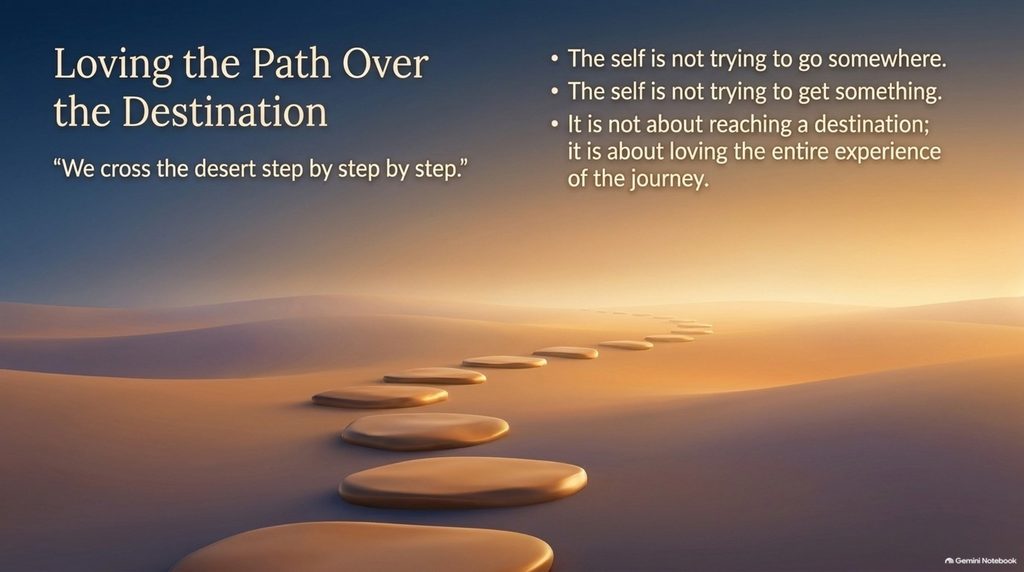
And it’s because we cross the desert step by step by step by step. Every step that you take is not about reaching a destination, because the love is not the love for the destination. It’s the love of God for everything. It’s not about the destination.
When we speak about love, we speak about loving the path, loving the journey, loving the entire experience—not being so focused on fixing something or getting rid of something or getting somewhere.
Because we are the self. The self is not trying to go somewhere or to get somewhere or to get something. We are the self. I am the self. I am home. I’m already the freedom that I seek is the freedom that I am.
That was wonderful. Really, really thank you.
Nice to see you. I always thought the I-thought is the number one enemy whom I have to. I never thought from this point of view that because of the I-thought and the suffering you stopped to look at, you know, take a pause. It’s so amazing explanation. It opened so many things, so many blocks which I had.
Very nice to see you. Thank you so much.
Well, happy Thanksgiving everybody. Grateful for us, for our friendship, our love of truth, our love of each other, our love of God. Our love period. So grateful.
Thank you all, and have a wonderful Thanksgiving. Happy Thanksgiving. Beautiful.
Thank you, everyone. Happy Thanksgiving.
Thank you, the same to all of you.
Bye.
AI Summary
Awareness, the I-Thought, and Suffering
Date: Thursday, November 26, 2026
Duration: 41:43
Key Points
- Awareness remains present through thoughts and emotions.
- Suffering can prompt inquiry into underlying beliefs.
- Peace need not wait for emotions to end.
- Freedom is present rather than a destination.
Overview
| Concept | Detail |
|---|---|
| Awareness | Remains still while appearances arise and dissolve |
| I-thought | Creates an impression of separation |
| Localization | Body identification makes the self feel located |
| Suffering | Can prompt inquiry into underlying assumptions |
| Anger | Blame and resistance perpetuate the cycle |
| Peace | Does not require the emotional storm to end |
| Practice | Gratitude includes difficult people and experiences |
The session explores awareness, identity, suffering, and the freedom of being.
Presence
Rest as the experience already present, with effortless intimacy toward breath, thoughts, and the peace of being. Appearances arise in awareness and dissolve back into it; awareness itself does not arise.
Like a screen showing moving waves, awareness remains still even when attention focuses on movement. Speaker D found peace through dialogue after meditation did not quiet a restless mind and emotions.
Identity
The I-thought creates an impression of separation. Identifying with the body also makes the self seem localized wherever the body is.
Inquiry: Look closely at the me-feeling and find awareness and presence.
Identification: Thought, perception, and bodily or world events do not define the self.
The me-feeling can dissolve like a cloud in the open sky. Shift from fixation on the I-thought to the open field of not knowing; even a lofty spiritual identity remains a definition.
Suffering
Speaker E asked why the I-thought feels like the real self, especially during anger or sorrow. Speaker A replied that no thought can be perceived without awareness: the I-thought may seem to veil awareness, but cannot remove it.
Habitual unhappiness can lead to coping and cover-ups. As suffering intensifies, it can prompt closer inquiry into the beliefs and assumptions behind decisions.
Anger often brings a cycle of resistance:
- Blame someone outside yourself for the feeling.
- Push anger toward them, inviting it back.
- Fight each new emotional storm without ending the pattern.
Peace
Notice that anger and the emotional field appear in awareness rather than defining it. Peace need not depend on the storm ending; a small glimpse of this understanding can grow like a candle becoming a fire.
“I am not the storm. I am perceiving the storm.”
Allow and feel difficult emotions rather than trying to escape them through blame, accusation, or justification.
Practice
Everyday spiritual practice includes ways of meeting the whole experience:
- Cultivate patience, tolerance, and non-reactivity.
- Practice forgiveness and gratitude, including toward difficult people.
- Be kind without trying to gain something or become better.
Love the path: Do not make fixing yourself or reaching a destination the goal.
The self is already home; the freedom sought is the freedom one is.